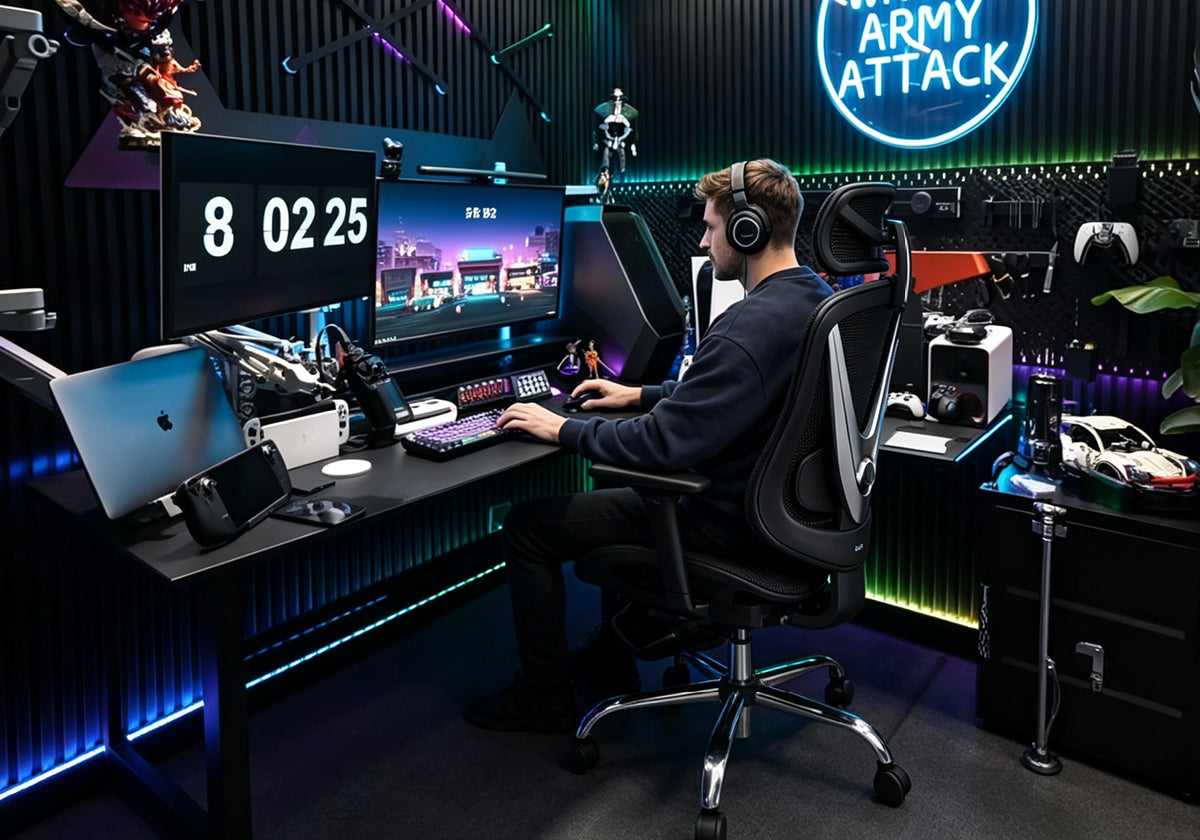
They look cool. They come in bold colors with racing stripes. They're marketed to anyone who spends hours at a desk — gamers, streamers, remote workers. But if you've ever sat in a gaming chair for a full workday, you might have noticed something: your back hurts.
The gaming chair vs ergonomic office chair debate is one of the most common questions among desk workers. And the answer might surprise you — because for most people, the chair that looks the part isn't the chair that supports your spine.
Let's break down the real differences, why ergonomics experts consistently warn against gaming chairs for all-day use, and how to choose the right one for your situation.
The Gaming Chair Design: Built for Looks, Not Spines
Gaming chairs trace their design to racing car seats — bucket seats, high backs, bold upholstery, fixed lumbar pillows. That aesthetic looks great in a product photo and on a stream. But a racing seat is designed to hold you in place during high-G turns, not to support a neutral spine during eight hours of typing.
Here's where gaming chairs typically fall short:
1. Bucket Seats Force an Unnatural Posture
The defining feature of a gaming chair is its bucket-style seat — raised side bolsters that cup your hips and thighs. In a car, this keeps you from sliding during turns. At a desk, it does two problematic things:
-
Restricts movement. You can't shift your hips or cross your legs without fighting the bolsters. Your spine needs to move throughout the day — fixed positions increase disc pressure and muscle fatigue.
-
Creates pressure points. The side bolsters press into your thighs and hips, especially if you're broader or wider than the seat was designed for. Over hours, this can cause numbness and discomfort.
An ergonomic chair uses a flat, open seat pan that lets you move freely and adjust your position as needed.
2. The "Lumbar Pillow" Isn't Real Lumbar Support
Almost every gaming chair comes with a small, soft pillow that straps to the backrest and is marketed as "lumbar support." Here's the problem:
-
It's not adjustable. The pillow is fixed at one height. If your lumbar curve sits an inch higher or lower, the pillow misses it entirely — pushing into your mid-back or digging into your sacrum.
-
It's too soft. A pillow compresses under your weight, providing minimal actual support. Real lumbar support is firm, positioned precisely, and often depth-adjustable.
-
It shifts. Strap-on pillows slide down, bunch up, and need constant readjustment.
Ergonomic chairs use built-in, height- and depth-adjustable lumbar supports that stay where you put them and provide consistent, targeted pressure exactly where your spine needs it.
3. High Backs and Headrests Can Strain Your Neck
Gaming chairs typically have tall backs with an attached headrest pillow. The idea is to support your neck while gaming. In practice:
-
The headrest is often too high. It pushes your head forward instead of supporting the base of your skull, leading to "text neck" and upper-back strain.
-
You don't need neck support while upright. When you're sitting upright working or gaming, your neck should be in a neutral position — ears over shoulders. A headrest that touches your head in this position is pushing it forward.
-
The high back can prevent shoulder movement. Some gaming chair backs are so tall and stiff that they restrict your ability to lean and turn naturally.
4. Poor Mechanisms and Build Quality
Most gaming chairs in the $150–$400 range use basic mechanisms:
-
Simple knee-tilt that pivots from a fixed point, lifting your feet off the floor when you recline.
-
Fixed or limited armrests — often only height-adjustable, sometimes not even that.
-
Thin padding that compresses after 6–12 months, leaving you sitting on a hard base.
-
Plastic components that crack or wobble over time.
Premium ergonomic chairs use synchro-tilt mechanisms, 4D armrests, heavy-duty gas cylinders, and aluminum bases — all designed for years of daily use.
5. Heat and Sweat
Gaming chairs are almost always upholstered in PU leather (faux leather) or real leather. Neither breathes. After a few hours, your back and legs are hot and sweaty. This isn't just uncomfortable — it can cause skin irritation and make you shift constantly trying to find a cool spot.
Ergonomic chairs often use breathable mesh backs (and sometimes mesh seats) that allow air circulation, keeping you cooler during long sessions.
The Ergonomic Chair Design: Built for Your Spine
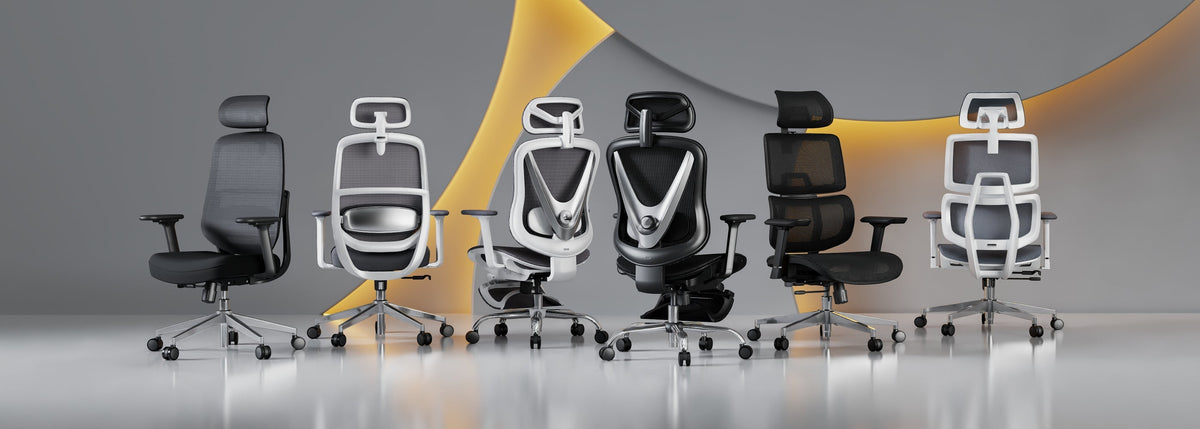
Ergonomic office chairs aren't designed to look like race car seats. They're designed based on research into spinal biomechanics, disc pressure, and long-term sitting comfort. Here's what sets them apart:
1. Adjustable Lumbar Support
The gold standard is a lumbar support that adjusts both height (to match where your curve sits) and depth/firmness (to control how much pressure it applies). This means the support fits your unique spine, not a one-size-fits-all pillow.
Quelsoft: Every chair features height- and depth-adjustable lumbar support — because your lumbar curve is unique, and a fixed pad will never fit everyone.
2. Seat Depth Adjustment
Being able to slide the seat pan forward and back is critical for proper fit. If the seat is too deep, you slide forward and lose lumbar contact. If it's too shallow, you lack thigh support. Seat depth adjustment lets you fit the chair to your leg length — something no gaming chair offers.
3. Synchro-Tilt Mechanism
A synchro-tilt mechanism moves the seat and backrest together at a calibrated ratio. When you recline, your feet stay on the floor, your eyes stay level, and your back maintains contact with the lumbar support. This dynamic movement reduces disc pressure and lets you shift positions throughout the day — essential for spinal health.
4. 4D Armrests
Height, width, depth, and pivot adjustment. Your arms and shoulders are unique, and your armrests should match your exact desk setup and arm position. Fixed or 1D armrests force you to adapt to the chair instead of the other way around.
5. Breathable Materials
Mesh backs and high-quality foam or mesh seats keep you cool and supported. No more sweaty backs after a long session.
6. Durability and Warranty
A well-built ergonomic chair is designed to last 10+ years, with warranties to match.
Quelsoft: Every chair comes with a 5-year warranty and is built with heavy-duty mechanisms and premium materials — because a chair you use every day shouldn't need replacing every two years.
When a Gaming Chair Might Actually Be Fine
To be fair, gaming chairs aren't evil. They can work in specific situations:
| Situation | Verdict |
|---|---|
| You only sit 1–3 hours a day | May be acceptable |
| You prioritize aesthetics over function | Acceptable for casual use |
| You're young with no back issues | Tolerable, though still not ideal |
| You found a high-end gaming chair with real ergonomics | Rare, and often costs as much as a proper ergonomic chair |
If any of these describe you, a gaming chair might be acceptable. But if you're using the chair for full-time work or long gaming sessions, the ergonomic tradeoffs aren't worth it.
Who Should Definitely Choose an Ergonomic Chair
An ergonomic chair isn't a luxury — it's a necessity if:
-
✅ You work from home full-time (6+ hours a day at a desk)
-
✅ You already have back, neck, or shoulder pain
-
✅ You game for 4+ hours at a time
-
✅ You're taller or shorter than average
-
✅ You plan to keep the chair for 5+ years
-
✅ You share the chair with others
The Price Reality
Here's a common misconception: ergonomic chairs are more expensive than gaming chairs.
| Gaming Chair | Ergonomic Chair | |
|---|---|---|
| Upfront cost | $150–$300 | $500–$800+ |
| Lifespan | 1–2 years | 5–10+ years |
| Cost per year | $125–$250 | $100–$160 |
| Experience | Declines quickly | Consistent support |
A $250 gaming chair typically lasts 1–2 years before the padding compresses, the mechanism loosens, or something breaks. That's **$125–$250 per year.**
A quality ergonomic chair at $500–$800, with a 5+ year lifespan, costs $100–$160 per year — and you get a better experience the entire time.
Quelsoft: We believe proper ergonomics shouldn't require a four-figure budget. Our chairs deliver adjustable lumbar, seat depth, synchro-tilt, and 4D armrests at a mid-range price — backed by a 5-year warranty and a 30-day free trial with free returns.
How to Make the Switch (If You're Coming from a Gaming Chair)
If you've been using a gaming chair and decide to switch to an ergonomic chair, here's what to expect:
-
It may feel different at first. Ergonomic chairs are firmer and more supportive than the soft, cushioned feel of a gaming chair. Give it 1–2 weeks for your body to adjust.
-
Adjust everything. Seat height, seat depth, lumbar height and depth, armrests, tilt tension. Spend 10 minutes dialing it in on day one.
-
You'll move more. Without bucket bolsters restricting you, you'll naturally shift positions more — which is exactly what your spine wants.
-
The neck pillow will feel unnecessary. Most ergonomic chairs either don't include a headrest or make it optional/height-adjustable. If you work upright, you probably don't need one.
Final Verdict
| Choose a Gaming Chair... | Choose an Ergonomic Chair... |
|---|---|
| If you sit casually (under 3 hours) | If you work or game for long sessions |
| If you prioritize aesthetics | If you have any back or neck discomfort |
| If you have no existing pain issues | If you want a chair that fits your body and lasts for years |
For the vast majority of people reading this — people who spend their days at a desk — an ergonomic chair isn't a splurge. It's an investment in your daily comfort and long-term spinal health.
Your back will notice the difference within a week.
This article reflects common ergonomic advice and widely shared buyer experiences. Individual comfort varies. If you have persistent or severe back pain, consult a healthcare professional.